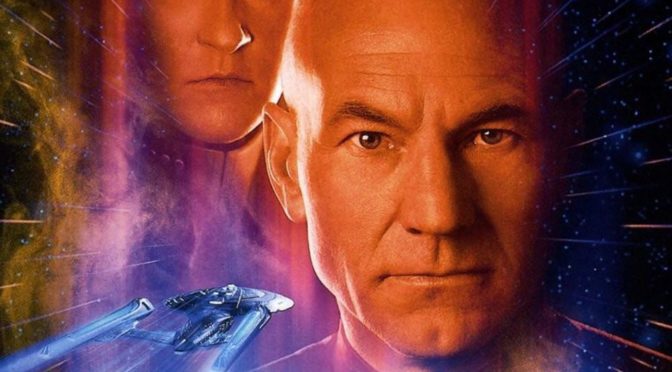
When Star Trek: First Contact premiered, audiences were captivated by its sleek Borg invasion, emotional stakes, and the historic depiction of humanity’s first warp flight. But one casting choice stood out—not for its fame or dramatic weight, but for its eerie alignment with real-world science. A minor on-screen role was filled by an individual whose career had long been dedicated to the scientific pursuit of extraterrestrial intelligence. That person wasn’t just playing a scientist—they were one.
Their involvement wasn’t a publicity stunt or a celebrity cameo. It was a deliberate fusion of science and storytelling, where an actor’s real-life passion for decoding alien signals shaped how they portrayed humanity’s encounter with the unknown.
This isn’t science fiction pretending to be science. This is science stepping into science fiction—and doing so with credibility, nuance, and purpose.
Who Was the Scientist-Actor Behind the Role?
The individual in question is Dr. H. Paul Shuch, a radio astronomer and longtime director of The SETI League, Inc., a nonprofit dedicated to the Search for Extraterrestrial Intelligence. While not a household name, Shuch’s contributions to amateur radio SETI research positioned him as a respected figure in the field during the 1990s.
In Star Trek: First Contact, Shuch appears briefly as a Starfleet engineer during the warp flight control room sequence—the same scene where Zefram Cochrane makes history by breaking the light barrier. His role is silent, limited to a few seconds on screen, yet his presence carries symbolic weight.
What makes this more than a trivia footnote is the context: Shuch didn’t audition. He wasn’t recruited for acting chops. He was invited to appear because of his real-world work in the search for alien life—a rare case of Hollywood seeking scientific authenticity in casting, not just consultation.
Why Would a Scientist Agree to a Silent Film Role?
On the surface, it seems unusual: a respected academic trading lab time for set time, even if just for a day. But for Shuch, the decision wasn’t about fame or a career pivot. It was about visibility, mission alignment, and the power of narrative.
SETI has long struggled with public perception. Despite rigorous methodology, the search for intelligent life beyond Earth is often dismissed as fringe or speculative. By stepping into one of the most iconic sci-fi franchises in history—especially one that dramatizes first contact—Shuch saw an opportunity to legitimize the quest.
His appearance sent a subtle message: This isn’t fantasy. This is a scientific endeavor we’re preparing for.
In interviews, Shuch has described the experience as “a full-circle moment.” Star Trek had inspired his interest in space exploration as a young man. Now, decades later, he was contributing—however briefly—to its cinematic legacy, not as a fan, but as a peer.
The Production’s Broader Commitment to Scientific Plausibility
Shuch’s casting wasn’t an isolated gesture. First Contact was notable among Star Trek films for its attention to technical detail, particularly in the depiction of warp theory and early 21st-century Earth.
The production team consulted with physicists and aerospace engineers to refine concepts like the warp field geometry and the Phoenix spacecraft’s design. While some liberties were taken (as any film must), the goal was to ground speculative elements in real science.
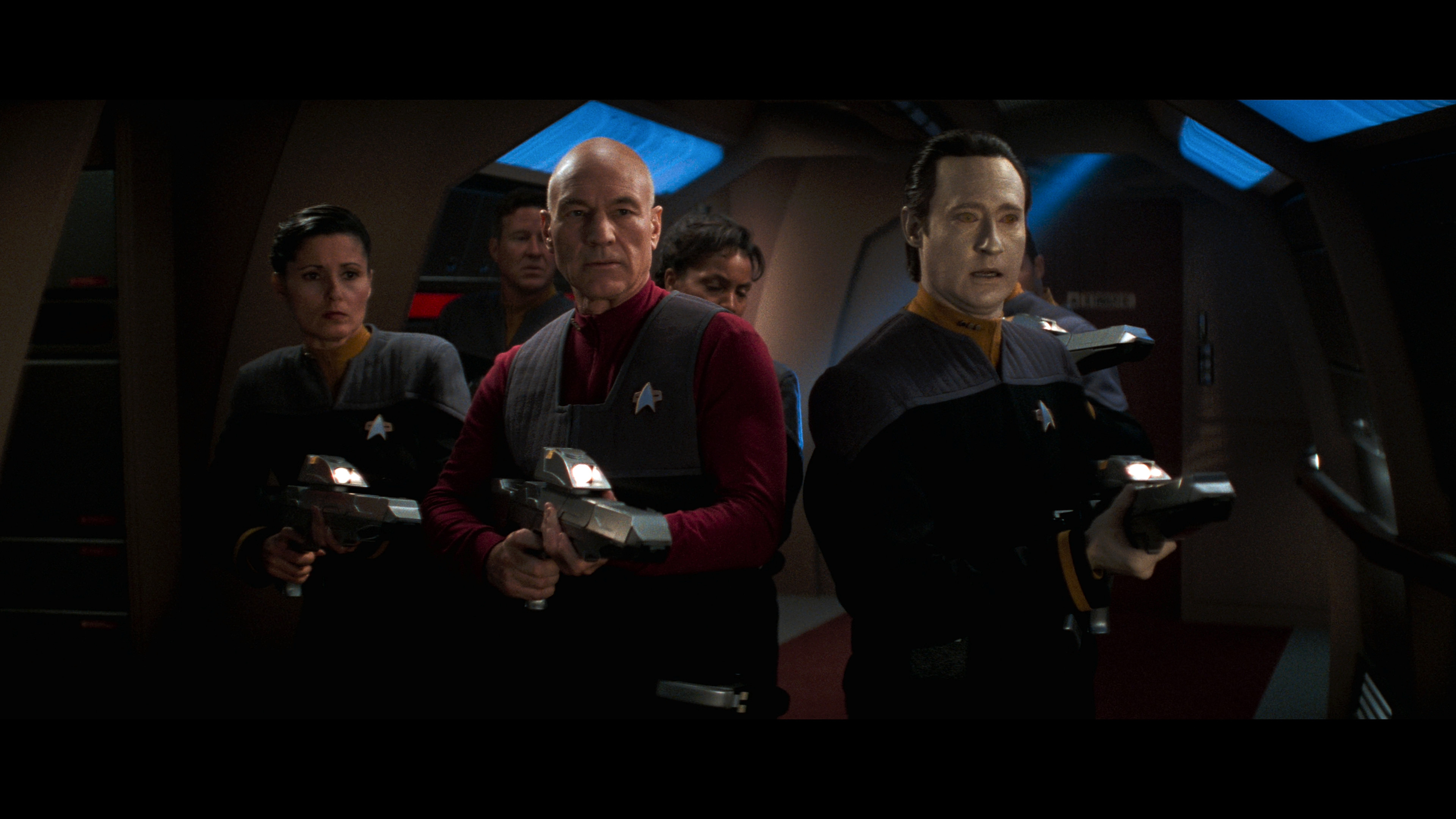
Shuch’s presence fit perfectly within this ethos. His role wasn’t just symbolic—it was functional. During his time on set, he offered informal input on dialogue and set design, particularly in scenes involving communication systems and signal detection. Though uncredited, his insights helped shape background details that fans and scientists alike have since praised for their plausibility.
For example, the radio telescope array shown monitoring Cochrane’s flight includes signal-processing displays that resemble real spectrograms used in SETI research. That level of detail wasn’t accidental.
Behind the Scenes: How Did a SETI Scientist End Up on the Set?
The connection began through mutual contacts in the science communication community. At the time, Star Trek producers were actively reaching out to scientists for technical advice, especially as the film dealt with humanity’s technological awakening.
When the idea of including real scientists as background characters was proposed, Shuch’s name came up—not just for his credentials, but for his ability to communicate complex ideas clearly. The production invited him to visit the set, and during that visit, the idea of casting him emerged organically.
There was no screen test. No negotiations. Just a simple offer: “Would you like to be in the movie?”
For Shuch, it was an easy yes.
He flew to Los Angeles, was fitted for a Starfleet uniform, and spent a day on set. His instructions were minimal: “Look intense. Pretend you’re monitoring a very important signal.”
The scene, though brief, was shot with multiple takes—each time reinforcing the gravity of first contact. And each time, Shuch wasn’t acting. He was imagining what it would really feel like to detect a signal from another civilization.
The Impact of Scientist-Casting in Sci-Fi Films
Shuch’s role may be small, but it represents a larger trend: the growing integration of real scientists into science fiction storytelling.
Films like Interstellar, Arrival, and The Martian have set new standards by embedding actual physicists, linguists, and planetary scientists into their production teams. But having a scientist appear on screen—not just behind the scenes—adds another layer of authenticity.
It signals to audiences that this story, however fantastical, is rooted in real human inquiry.
More importantly, it validates the scientist’s role beyond the lab. Science isn’t just data and equations. It’s wonder, curiosity, and the courage to ask “What if?”—values at the heart of Star Trek.
When viewers see someone like Shuch in uniform, it subtly reshapes perception: scientists aren’t just advisors to the story. They are part of it.
Why Authenticity Matters in First Contact Narratives
Depictions of first contact carry cultural weight. They shape how society thinks about alien life, interstellar communication, and humanity’s place in the cosmos.
Too often, these stories default to invasion tropes or mystical encounters. First Contact broke that mold by framing first contact as a moment of scientific triumph—a detection, a response, a handshake across light-years.
By involving someone with real experience in searching for such signals, the film deepened its emotional and intellectual resonance.
Consider this: when Cochrane hears the Vulcan ship approaching, the room erupts in tension. Technicians scan displays, adjust frequencies, verify signatures. That urgency? It mirrors real SETI operations. And having Shuch in that room—a man who’s spent decades doing exactly that—lends the scene a quiet authenticity no actor could fully replicate.
It’s not about accuracy of equipment or jargon. It’s about the posture of science: cautious, rigorous, hopeful.
The Legacy of a Minor Role
Today, Shuch’s on-screen moment lasts less than ten seconds. You might miss him if you blink. But his contribution extends far beyond screen time.
He became a bridge between two worlds: one devoted to discovering truth, the other to imagining it. And in that intersection, something powerful emerged—a narrative where science isn’t just respected, but lived.
His casting also opened doors. In later years, other scientists have made cameos in sci-fi projects, from Neil deGrasse Tyson on The Big Bang Theory to Jill Tarter (the real-life inspiration for Contact) appearing in Star Trek: Voyager.
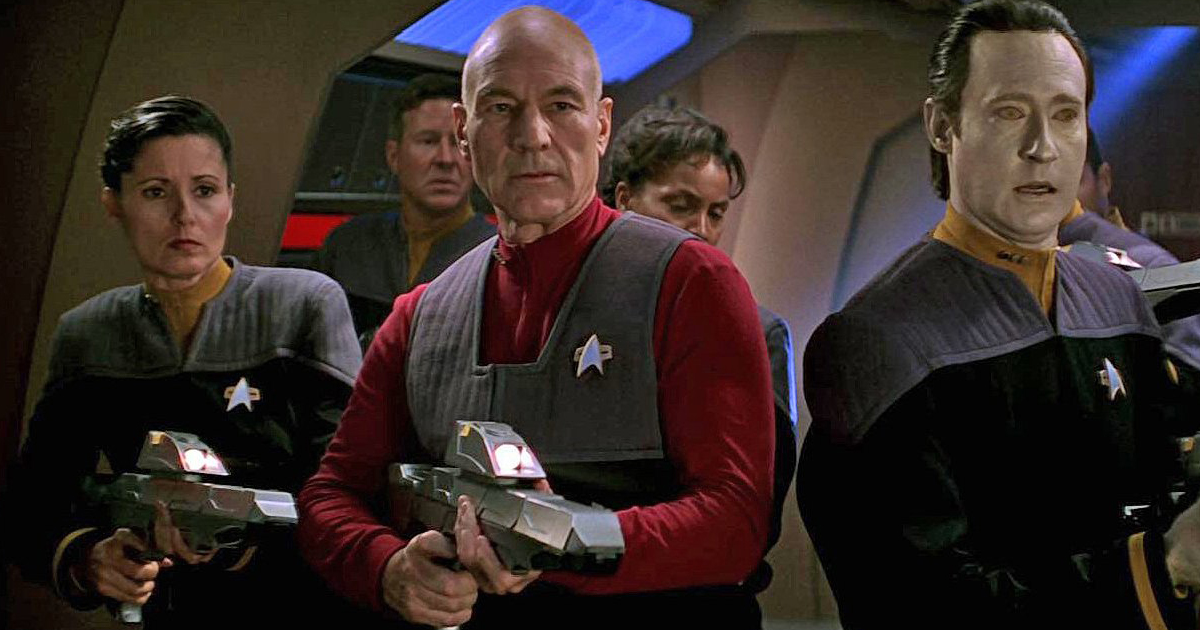
But Shuch’s role remains unique. He wasn’t a celebrity scientist. He wasn’t famous. He was a working researcher invited into fiction because of what he represented: decades of quiet dedication to one of humanity’s biggest questions.
What It Means for the Future of Sci-Fi Storytelling
The inclusion of real scientists in fictional roles isn’t a gimmick—it’s a storytelling evolution. As audiences grow more sophisticated, they crave authenticity. They want to believe that the science behind the fiction could be real.
Filmmakers who recognize this are starting to cast not just for star power, but for substance.
Imagine a future film about Mars colonization where actual planetary geologists play mission controllers. Or a thriller about AI where computer scientists appear as developers in the background. These aren’t distractions. They’re depth.
And when those moments are guided by people who’ve spent their lives on the frontiers of discovery, fiction gains a rare kind of truth.
For Star Trek: First Contact, casting a SETI researcher wasn’t about filling a background slot. It was about honoring the spirit of exploration—the idea that one day, someone just like Shuch might be the first to hear a real signal from the stars.
Until then, his silent performance stands as a quiet tribute to that possibility.
Five Real-World Scientists Who’ve Appeared in Sci-Fi Roles
- Dr. H. Paul Shuch – Radio astronomer and SETI researcher, appeared in Star Trek: First Contact.
- Dr. Neil deGrasse Tyson – Astrophysicist, made multiple appearances on The Big Bang Theory and Star Trek: Enterprise.
- Dr. Jill Tarter – SETI pioneer, portrayed in Contact and appeared in Star Trek: Voyager.
- Dr. Brian Cox – Particle physicist, cameo in Doctor Who.
- Dr. Mae Jemison – Former NASA astronaut, appeared in Star Trek: The Next Generation.
Each brought credibility and inspiration, proving that science and storytelling are not opposites—but allies.
Common Mistakes in Depicting Scientists in Film
- Over-dramatizing reactions – Scientists don’t shout “Eureka!” over every discovery.
- Ignoring process – Real science involves repetition, failure, and peer review.
- Using jargon incorrectly – Misused terms break immersion for knowledgeable viewers.
- Casting only for looks – Prioritizing appearance over authenticity weakens believability.
- Isolating scientists as “lone geniuses” – Most breakthroughs are team efforts.
Films that avoid these pitfalls earn long-term respect from both audiences and experts.
Actionable Insight for Filmmakers and Writers
If you’re creating science fiction, consider consulting—and even casting—real scientists in technical or background roles. Their presence, even silent, adds layers of realism that resonate with audiences and elevate your story’s credibility. Reach out to universities, research organizations, or science communication networks. The right person might just be one email away.
FAQ
Did the scientist in First Contact have any lines? No, Dr. H. Paul Shuch’s role was non-speaking, appearing as a technician in the warp flight control room.
Why did the First Contact team choose a real SETI researcher? To enhance authenticity and honor the scientific foundation of the first contact narrative.
Is Dr. Shuch known for any major scientific discoveries? He’s best known for advancing amateur SETI research and leading The SETI League’s efforts in radio telescope development.
Has anyone else like him appeared in Star Trek? Yes, other scientists and astronauts, including Neil deGrasse Tyson and Mae Jemison, have made appearances.
Does Star Trek often include real scientists? Not regularly, but it has a history of consulting experts and occasionally featuring them on screen.
Was Shuch’s appearance a one-time event? Yes, this was his only on-screen role in a major film, though he remains active in science outreach.
How can filmmakers find real scientists for roles? Through academic networks, science festivals, SETI organizations, and platforms like SciStarter or The Science & Entertainment Exchange.
FAQ
What should you look for in How a Real-Life UFO Researcher Joined Star Trek: First Contact? Focus on relevance, practical value, and how well the solution matches real user intent.
Is How a Real-Life UFO Researcher Joined Star Trek: First Contact suitable for beginners? That depends on the workflow, but a clear step-by-step approach usually makes it easier to start.
How do you compare options around How a Real-Life UFO Researcher Joined Star Trek: First Contact? Compare features, trust signals, limitations, pricing, and ease of implementation.
What mistakes should you avoid? Avoid generic choices, weak validation, and decisions based only on marketing claims.
What is the next best step? Shortlist the most relevant options, validate them quickly, and refine from real-world results.