Safety on construction sites doesn’t happen by accident. It’s built into every daily routine, every briefing, and every conversation between crew members. Yet one of the most effective tools for reinforcing that safety—toolbox talks—is often underutilized, not because of indifference, but because of access. Many foremen, supervisors, and safety officers want to run consistent safety discussions but hit a wall: finding quality, relevant, and free toolbox talks on construction that don’t require hours of editing or licensing fees.
That’s where this guide steps in. We’re cutting through the noise and delivering actionable resources—free, field-tested toolbox talks that work in real-world construction environments. Whether you're managing a small crew or overseeing a large-scale project, you’ll find tools, templates, and strategies that save time, reduce risk, and keep your team safe.
Why Free Toolbox Talks Matter on Construction Sites
Toolbox talks are short, focused safety meetings—typically 10 to 15 minutes—held at the start of a shift or before a high-risk task. Their goal is simple: reinforce safe behavior, highlight hazards, and open dialogue. But their impact is anything but small.
On average, construction sites that conduct regular toolbox talks see up to a 30% reduction in incidents (OSHA, NIOSH data). Yet many teams skip them due to time pressure, lack of material, or uncertainty about content.
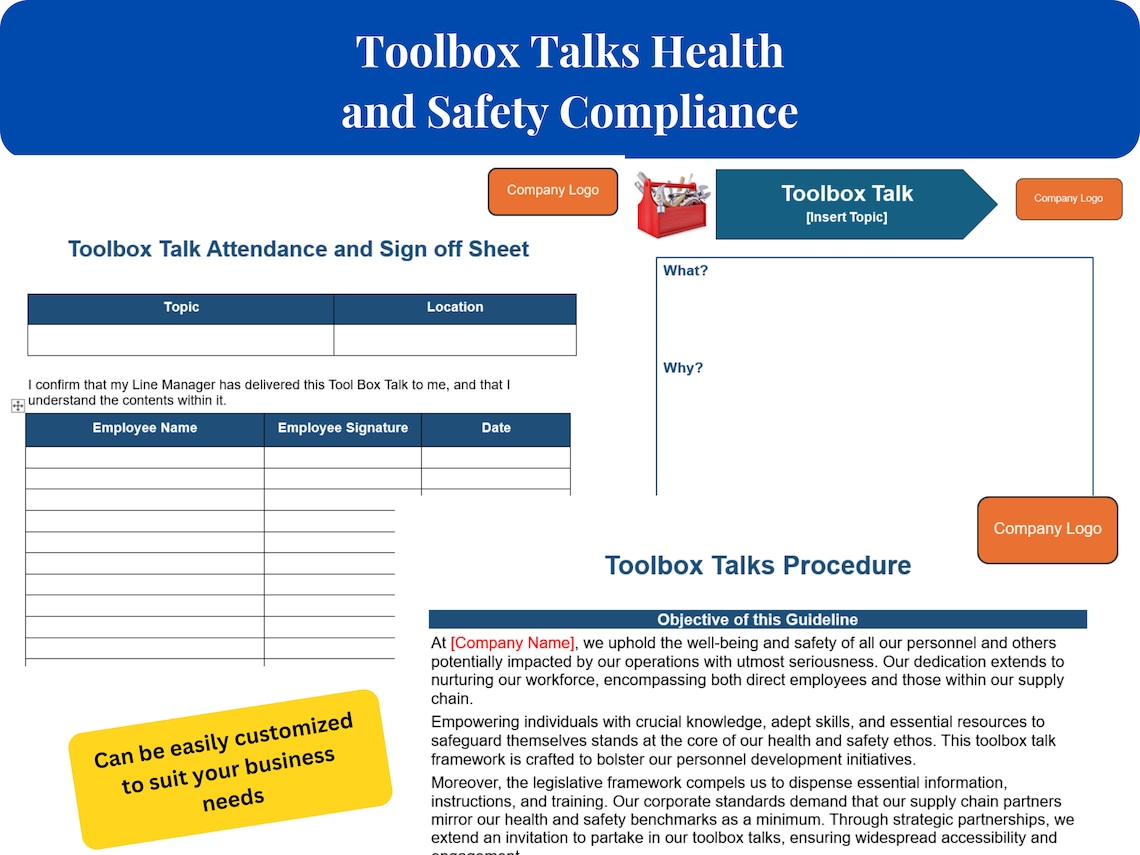
Free toolbox talks solve two major barriers: - Cost: No budget needed for premium safety packages. - Time: Ready-to-use templates mean no drafting from scratch.
But not all free resources are created equal. The best ones are: - Aligned with OSHA standards - Task-specific (e.g., working at heights, electrical safety) - Written in plain language - Include discussion prompts and sign-off sheets
A poorly written or generic talk might check the box but won’t change behavior. That’s why relevance and clarity are non-negotiable.
Common Mistakes That Undermine Toolbox Talks
Even with free materials, many teams fail to get value. Here’s what goes wrong—and how to fix it.
1. Reading, Not Engaging Too often, the supervisor reads from a script while the crew stands silently. This turns safety into a chore. Fix: Turn it into a conversation. Ask: “Has anyone seen this hazard before?” or “How would you handle this situation?”
2. Using Generic Topics A talk about “general PPE” every week becomes background noise. Fix: Match talks to current site conditions. If roof work starts Monday, run a fall protection talk Friday afternoon.
3. Skipping Documentation No one remembers who attended or what was covered. Fix: Use sign-in sheets with space for names, roles, and signatures. Keep these on file for audits.
4. One-Size-Fits-All Approach A talk designed for road crews may not apply to interior finishers. Fix: Choose or customize content for your trade and phase of work.
Avoiding these pitfalls ensures your free toolbox talks don’t just exist—they work.
Top 5 Sources for Free Construction Toolbox Talks
.jpg)
You don’t need to pay for quality. These trusted sources offer genuinely useful, free toolbox talks:
| Source | Key Features | Best For |
|---|---|---|
| OSHA.gov | Official, regulation-aligned topics, downloadable PDFs | Compliance and legal defensibility |
| HSE UK (hse.gov.uk) | Well-structured, multilingual, hazard-specific | Teams with diverse language backgrounds |
| SafetyNow | Editable templates, visual aids, industry-specific | Fast customization and visual learning |
| ConstructSafe (constructsafe.us) | US-focused, OSHA-compliant, weekly topics | Daily or weekly scheduling |
| Trade Associations (e.g., ABC, AGC) | Member-exclusive but often free access | Contractors affiliated with national groups |
Each of these platforms provides ready-to-use content—no paywall, no trial period. Some even offer email subscriptions that deliver new talks weekly.
For example, OSHA’s “Hazard Alert” series includes downloadable talks on trenching, silica exposure, and crane safety—directly tied to recent incident data. That’s not filler; that’s frontline intelligence.
How to Customize Free Toolbox Talks for Maximum Impact
A free template is a starting point. Real impact comes from adaptation.
Step 1: Match to Today’s Work If your crew is installing rebar, pull a talk on “reinforcing steel safety” and add site-specific notes: - “Today, we’re working near the southwest edge—guardrails are in place, but don’t bypass them.” - “Spotter must be assigned when moving steel with the crane.”
Step 2: Localize the Language Avoid corporate jargon. Replace “ensure PPE is utilized” with “everyone on this pad wears gloves and eye protection—no exceptions.”
Step 3: Add Real Stories (When Possible) “Last month, a crew in Ohio lost control of a power trowel because gloves got caught. That’s why we inspect tools and wear close-fitting gear.”
Stories create emotional memory—far more effective than rules alone.
- Step 4: Rotate Topics Weekly Use a 12-week safety cycle. Example:
- Fall protection
- Hand tool safety
- Electrical hazards
- Confined spaces
- Ladder use
- Fire prevention
- PPE compliance
- Site housekeeping
- Crane operations
- Silica dust
- Emergency response
- Mental health and fatigue
This ensures broad coverage without repetition.
Real-World Example: A Weekly Toolbox Talk in Action
Site: Commercial concrete pour, urban downtown Crew: 12 workers, including pump operator, finishers, and laborers Talk Topic: “Pump Hose Safety During High-Pressure Pouring”
The supervisor opens with: “Last week in Texas, a concrete hose burst and took out a worker’s leg. That could’ve been us. Let’s talk about how we avoid that.”
He reviews: - Hose inspection checklist (cracks, wear, couplings) - Safe distance during pumping (10 feet minimum) - Emergency shutoff procedure - PPE: steel-toe boots, gloves, face shield
Then asks: “Who’s operated the pump before? What near-misses have you seen?” Two workers share experiences—immediately raising awareness.
Everyone signs the sheet. The talk takes 12 minutes.
Result? The crew reports a loose coupling during pre-pour check—fixed before it failed. Proactive safety in action.
Integrating Free Talks into Your Safety Workflow
Free toolbox talks shouldn’t be random. They work best when embedded in a system.

Daily Routine: - 6:50 AM: Pull today’s talk based on task - 7:00 AM: Gather crew, deliver talk with interaction - 7:15 AM: Sign sheet, file digitally or physically
Monthly Review: - Audit talk topics covered - Identify gaps (e.g., missed confined space discussion) - Adjust next month’s plan
Leadership Accountability: - Superintendents review talk logs weekly - Safety manager spot-checks 2–3 talks per site
Digital tools can help. Use free Google Forms or Sheets to store sign-ins. Or leverage construction apps like SiteDocs (free tier available) to track talks and generate reports.
The goal isn’t perfection—it’s consistency. Ten minutes a day beats a two-hour lecture once a month.
Limitations of Free Toolbox Talks—And How to Overcome Them
Let’s be honest: free resources have downsides.
1. Variable Quality Some PDFs are poorly formatted, full of jargon, or outdated. Solution: Stick to government or industry-backed sources. Avoid random blog downloads.
2. Lack of Updates A 2018 talk may not reflect current OSHA priorities like heat illness or mental health. Solution: Cross-check topics with recent OSHA alerts or news. Update templates annually.
3. No Tracking Built-In Free PDFs don’t track attendance or completion. Solution: Pair every talk with a sign-in sheet—digital or paper.
4. Limited Visuals Text-heavy talks don’t engage visual learners. Solution: Add photos or sketches. Use a tablet to show a 30-second hazard video before the talk.
Free doesn’t mean low-value—if you choose wisely and enhance strategically.
Build a Culture, Not Just a Checklist
Toolbox talks are more than compliance. They’re cultural tools. When done right, they signal: - “We care about you.” - “Your voice matters.” - “Safety is everyone’s job.”
Free toolbox talks make this accessible to every team, big or small. You don’t need a corporate safety department to protect your crew—you need the right content, delivered consistently.
Start with one talk this week. Customize it. Make it real. Watch how attention shifts.
Because the best safety programs aren’t built on expensive software or binders thick with policy. They’re built on conversations—simple, honest, and repeated—around a toolbox at dawn.
FAQ
Where can I download free toolbox talks for construction? OSHA.gov, HSE UK, SafetyNow, and ConstructSafe offer free, downloadable toolbox talks in PDF format.
Are free toolbox talks OSHA-compliant? Many are, especially those from OSHA or recognized safety organizations. Always verify alignment with current standards.
How often should toolbox talks be held? Weekly is ideal, but daily is recommended on high-risk sites or during critical tasks.
Can I edit free toolbox talks for my crew? Yes—customizing talks for your site, crew, and task increases relevance and effectiveness.
Do toolbox talks need to be signed off? Yes. Attendance records protect your team and company during inspections or incident investigations.
What topics should I cover in construction toolbox talks? Focus on current hazards: fall protection, PPE, electrical safety, equipment operation, and site-specific risks.
How long should a toolbox talk last? Keep it to 10–15 minutes—short enough to maintain attention, long enough to cover key points.
FAQ
What should you look for in Free Toolbox Talks for Safer Construction Sites? Focus on relevance, practical value, and how well the solution matches real user intent.
Is Free Toolbox Talks for Safer Construction Sites suitable for beginners? That depends on the workflow, but a clear step-by-step approach usually makes it easier to start.
How do you compare options around Free Toolbox Talks for Safer Construction Sites? Compare features, trust signals, limitations, pricing, and ease of implementation.
What mistakes should you avoid? Avoid generic choices, weak validation, and decisions based only on marketing claims.
What is the next best step? Shortlist the most relevant options, validate them quickly, and refine from real-world results.